Which Spares Earn Their Space: A Risk-Ranked Stocking Method for Bosch Drive Systems

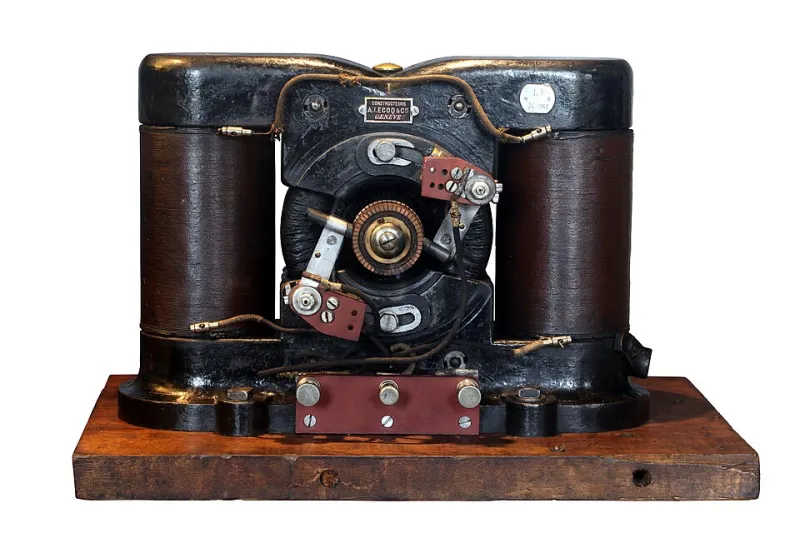
Photo: Karsarspares, CC0, via Wikimedia Commons
The problem with the inherited stock list
Most plants inherit a spares list rather than design one. It may have been assembled during commissioning, copied from a sister site, or generated by a well-meaning spreadsheet that lists every part number on the asset register. The result is often predictable: shelves holding items that have never failed, while the one encoder variant used across three critical lines is unavailable when it is needed.
For Bosch drive systems, the question is not whether to hold spares. It is which spares genuinely earn their space. A practical answer comes from ranking components against four operational criteria — failure probability, lead time, production criticality and interchangeability — and then testing the resulting matrix against realistic downtime scenarios.
The aim is not to eliminate risk. It is to make the residual risk visible and deliberate.
Four axes, not a single score
A common mistake is to reduce spares decisions to a single criticality rating. That tends to reward the loudest production area rather than the most consequential failure mode. A more defensible approach considers four axes separately, then combines them with judgement.
Failure probability should be based on site evidence, not intuition. Review Bosch drive fault histories, condition-monitoring trends, and maintenance records over the past three to five years. Encoders, cooling fans, brake resistors and sealing components often show different failure profiles from the drive itself. If the site has no history, use the first year of operation to build it deliberately.
Lead time is where UK plants need to be specific. A component held in a UK distributor's stock may be a next-day item; a configured drive or a particular motor variant may carry a multi-week lead time from the factory. The relevant figure is not the catalogue lead time but the realistic replenishment time under current conditions, including any customs or transport variability that affects inbound shipments.
Production criticality should reflect the consequence of the component failing, not the cost of the asset. A small encoder on a bottleneck machine may be more critical than a large drive on a line with buffered capacity. Consider whether production can be rerouted, whether manual operation is possible, and whether a temporary workaround exists.
Interchangeability determines how much stock is really needed. If one motor variant covers three machines, the case for holding it is stronger than for three near-identical variants that each serve a single asset. Standardisation is a spares decision as much as an engineering one.
Building the matrix in tiers
A useful output is a three-tier matrix rather than a binary hold-or-do-not-hold list.
Tier 1 — hold on site. These are components with a credible failure probability, a lead time that exceeds the acceptable production interruption, and limited interchangeability. Typical candidates include encoders for critical servo axes, cooling fans for drives in hot or dusty enclosures, and the specific brake resistors used on high-duty stopping applications. The test is not whether the item is expensive; it is whether waiting for delivery would stop production.
Tier 2 — hold locally or by agreement. These components justify access to stock but not necessarily ownership. A UK distributor agreement, a neighbouring site's stock, or a service partner's holding can be sufficient if the replenishment time is measured in hours rather than weeks. This tier is often the most cost-effective, but it depends on written agreements and verified availability rather than assumptions.
Tier 3 — do not stock. These are items with low failure probability, short lead times, or high interchangeability. Holding them ties up capital and shelf space without materially reducing risk. The decision should be reviewed if the asset's duty changes or if the supply situation deteriorates.
Testing the matrix against realistic scenarios
The matrix is only credible if it survives a scenario test. Take three or four plausible failure events and walk through them with the matrix in hand.
Scenario one: a servo encoder fails on a critical axis at 02:00 on a Sunday. Does the matrix identify the correct variant? Is it on site? Is the replacement procedure documented, and does the maintenance team have the tools and access to complete it? A spare that exists but cannot be fitted is not a spare.
Scenario two: a drive cooling fan fails during a hot summer week. Is the fan a Tier 1 item, or does the site rely on a next-day delivery that assumes the drive can run at reduced load? If the answer depends on ambient temperature, the matrix should say so.
Scenario three: a motor fails on a line with a single supplier and a long lead time. Is there a like-for-like spare, or a documented interchangeability route to another variant? If the route requires re-parameterising a drive, is that procedure available and has it been tested?
Scenario four: a component fails that is not in the matrix. What is the escalation path? The purpose of the test is not to prove the matrix perfect but to expose gaps in tiering, documentation or supplier agreements.
Keep the matrix alive
A spares matrix is a maintenance document, not a one-off procurement exercise. Review it annually, and after any significant change to the asset base, duty cycle or supply route. Record actual failures and consumptions against the matrix so that failure probability becomes evidence-based rather than assumed. Where a Tier 3 item fails twice in a year, the tiering should change.
For UK engineers, the practical value is straightforward. A risk-ranked matrix replaces a generic list with a defensible position: these are the components we hold, these are the ones we can obtain quickly, and these are the ones we have consciously chosen not to stock. That position is easier to explain to operations, easier to budget for, and more likely to hold up when the empty shelf test arrives at an inconvenient hour.