From Shelf to Shaft: Verifying Stored Bosch Motors and Drives Before Installation

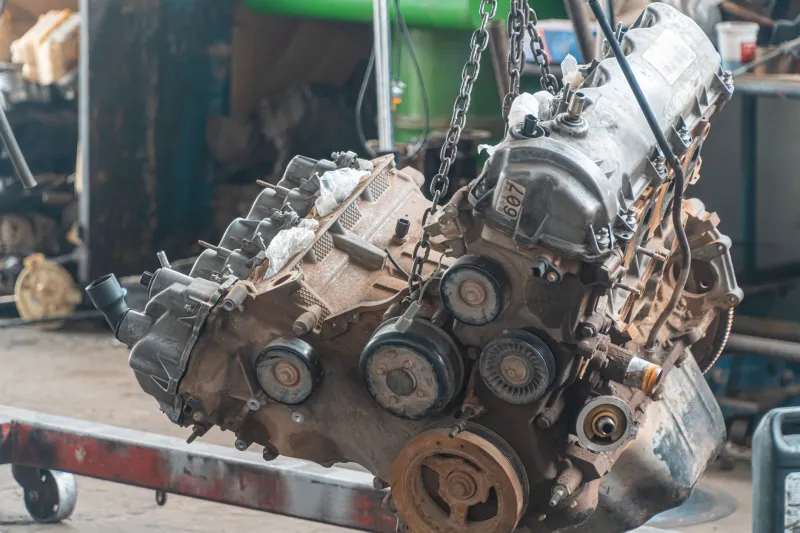
Photo: Shwangtianyuan, CC BY-SA 4.0, via Wikimedia Commons
A spare motor on a shelf can look like readiness. In practice, it is an asset in suspension. UK plants routinely hold identical Bosch motors and drives against breakdown, changeover or obsolescence, yet the spare is seldom included in the maintenance schedule that keeps the running assets healthy. Storage is not a neutral condition. Humidity, seasonal temperature swings, vibration from adjacent plant and simple time all act on windings, seals, bearings and DC-link capacitors.
The practical consequence is that a stored asset is not a commissioned asset. It may be mechanically sound and electrically intact, but it has not been proved against the duty it will face. The routine below is intended for spares that have been held for more than a few months, and for any drive or motor whose service history is uncertain.
Give every spare an identity and a review date
A spare without records is a rumour. The first step is to confirm the asset tag, nameplate data, firmware version, option modules and parameter archive against the as-built record for the machine it protects. Where a drive is concerned, verify that the archived parameter set matches the installed firmware and hardware configuration. A backup that cannot be restored safely is not a backup.
Assign a review date at the point of storage and treat that date as a maintenance task. Quarterly visual inspection and an annual electrical check are reasonable starting points for most UK industrial stores. Record the storage location, ambient conditions and any history of water ingress, dust or vibration.
Insulation resistance is a trend, not a tick box
For low-voltage motors, an insulation resistance test at 500 V DC is common practice. Disconnect the motor from the drive and from any control wiring before testing. Record the value at a known winding temperature, because insulation resistance falls as temperature rises. A single pass is useful; a series of readings taken under comparable conditions is far more informative. A reading that remains acceptable but declines over successive checks deserves investigation before the motor is coupled.
Do not apply an insulation tester to a drive's DC link, output terminals or control boards. Isolate the drive and follow Bosch instructions for any input or output checks. Where a motor has space heaters or anti-condensation arrangements, confirm that they have been energised as intended during storage, or that desiccant and breathers have been managed.
Shafts, seals and bearings need movement
A stored motor can develop false brinelling in its bearings if nearby plant transmits vibration while the shaft is stationary. Rotate the shaft by hand or at low speed on a quarterly basis where the design permits. Check for smooth rotation, abnormal noise, axial end-float and any sign of seal set or stick-slip. Look at the shaft extension for corrosion and at the seal lip for hardening or contamination.
Grease can separate during long storage. Where relubrication is specified, follow the manufacturer's quantity and interval rather than adding grease by habit. Confirm that drain plugs, breathers and terminal box gaskets are in place and that the enclosure is not relying on a temporary cover.
Reforming the DC link before first energisation
Electrolytic capacitors in stored drives lose their formed oxide layer over time. Applying full DC-bus voltage after a long idle period can stress them unnecessarily. If a drive has been stored beyond the manufacturer's stated period, reform the DC link using the approved procedure. This may involve a controlled voltage ramp, a reduced-voltage supply or a reforming function within the drive's commissioning tool, depending on the product.
Record the reforming date, the voltage steps applied, the duration and any leakage current or condition monitoring values. If the procedure is not documented for the specific drive, obtain guidance from Bosch rather than improvising. A reformed drive should then be treated as a commissioned asset and not returned to indefinite storage without a further review date.
Verify the parameter backup before you need it
Parameter archives are often checked at commissioning and then left unexamined. Before installing a spare drive, compare the archive with the machine record: motor nameplate data, encoder type, fieldbus settings, safety parameters, digital input assignments and drive limits. Confirm that the firmware in the spare is compatible with the archive and with the control system. Where a safety function is involved, ensure the relevant parameters and verification records are available to the competent person.
A useful test is to restore the archive to the spare in a safe, no-load condition and compare the resulting parameter set with the record. This exposes version mismatch, missing option files and undocumented changes while the machine is still available.
No-load rotation before coupling
Before the motor is coupled to the load, run it uncoupled at low speed and check direction of rotation, current balance, vibration, bearing temperature and encoder feedback. For a braked motor, confirm brake release and applied voltage. For a drive, verify that the motor identifies correctly and that the feedback signals are plausible across the speed range.
Only then should the motor be aligned and coupled. A no-load run will not prove the full duty, but it will catch the common storage faults: a stiff bearing, a contaminated encoder, a reversed phase sequence or a parameter set that belongs to another machine.
Storage is part of the maintenance strategy
The spare that sits is not automatically the spare that saves a shift. It needs an owner, a schedule and a record. Rotate spares into service where practical, keep the store dry and stable, and review the holding period against the manufacturer's storage guidance. A spare is an insurance policy, and insurance still requires premium payments.